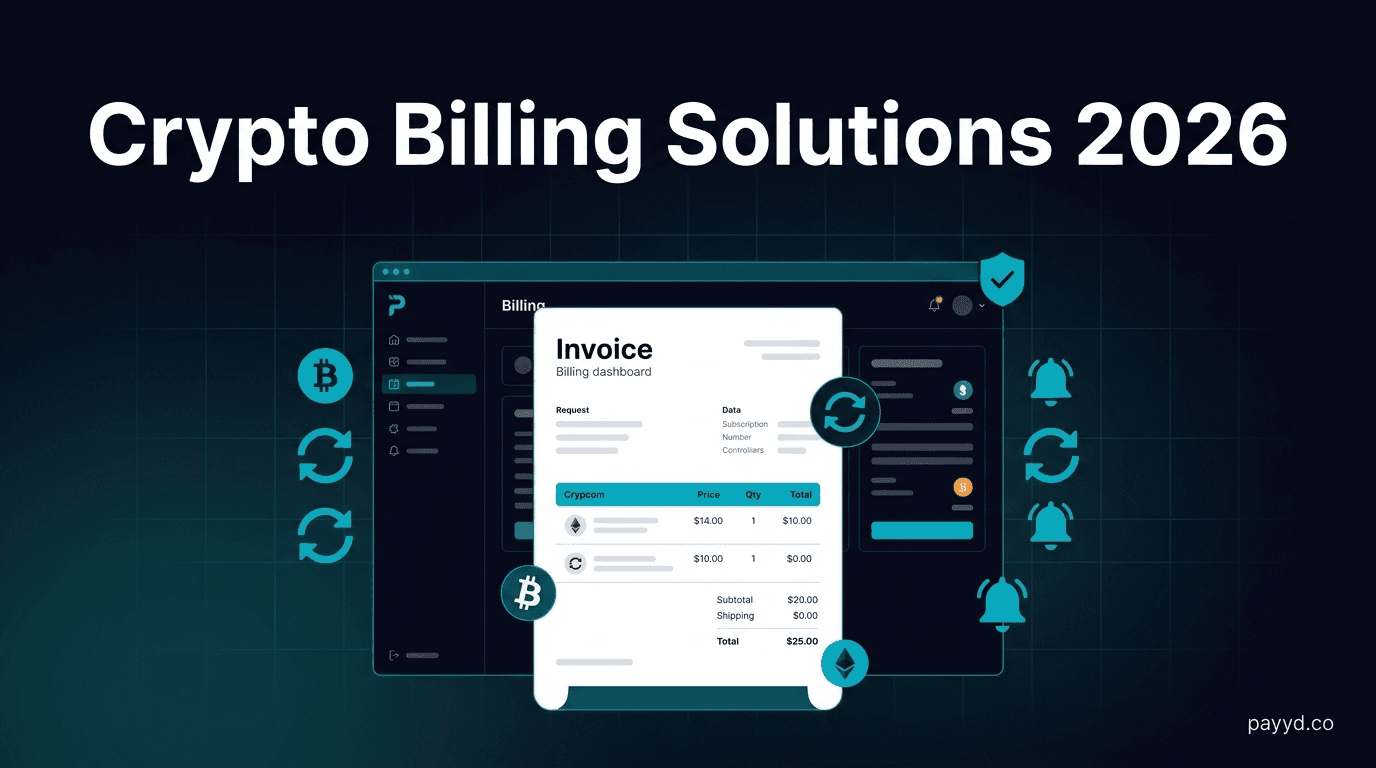
Crypto Billing Solutions for Business 2026: Invoice, Subscribe & Get Paid
Accept crypto payments with professional billing. Compare invoicing, subscription billing, and payment link solutions from NOWPayments, BitPay, BoomFi, and more.
Key Takeaways
- Crypto billing comes in three flavors: one-time invoices, recurring subscriptions, and shareable payment links — most gateways now handle all three
- NOWPayments and BoomFi are the strongest for subscription billing. BitPay leads on professional invoicing with fiat settlement
- For freelancers and small businesses, payment links from NOWPayments or BTCPay Server get you paid in under 2 minutes — no website required
- Accounting is the hidden gotcha: crypto invoices create taxable events, and you need to track cost basis at the time of each payment
Getting paid in crypto used to mean sending a wallet address over email and hoping the client sent the right amount. In 2026, that is embarrassing. Professional crypto billing solutions now handle invoices, recurring subscriptions, and payment links with the same polish you would expect from Stripe or FreshBooks — minus the 2.9% processing fees.
I have been testing billing features across every major crypto payment gateway for the past six months. This guide breaks down which platforms actually deliver on billing, which ones bolt it on as an afterthought, and how to set up professional crypto billing for your business today.
What Is Crypto Billing?
Crypto billing is exactly what it sounds like: generating invoices, subscriptions, or payment requests denominated in cryptocurrency. But the implementation matters more than the concept.
A proper crypto billing solution does three things traditional crypto payments do not:
- Price locking — The invoice shows a fiat amount ($500) and calculates the crypto equivalent at payment time, protecting both sides from volatility
- Professional formatting — Branded invoices with line items, due dates, and payment status tracking
- Automated reconciliation — Payment confirmation, receipt generation, and webhook notifications when an invoice is paid
Without these, you are just sharing a wallet address with extra steps.
Invoicing vs Subscriptions vs Payment Links
Before picking a gateway, you need to understand the three billing models and which one fits your business.
One-Time Invoicing
Best for: freelancers, agencies, B2B services, project-based work.
You create an invoice with line items, tax, and a due date. The client receives a link, pays in crypto, and you get a confirmation. This is the closest analog to traditional invoicing with tools like FreshBooks or QuickBooks.
BitPay handles this best. Their invoices look professional, support partial payments, and auto-convert to fiat if you want USD in your bank account instead of Bitcoin in your wallet.
Subscription Billing
Best for: SaaS companies, membership sites, content creators, service retainers.
The customer authorizes a recurring charge — monthly, quarterly, or annual — and the gateway handles rebilling automatically. This is harder in crypto because there is no "pull" mechanism like credit cards. The gateway needs to send a payment request each cycle and wait for the customer to approve it.
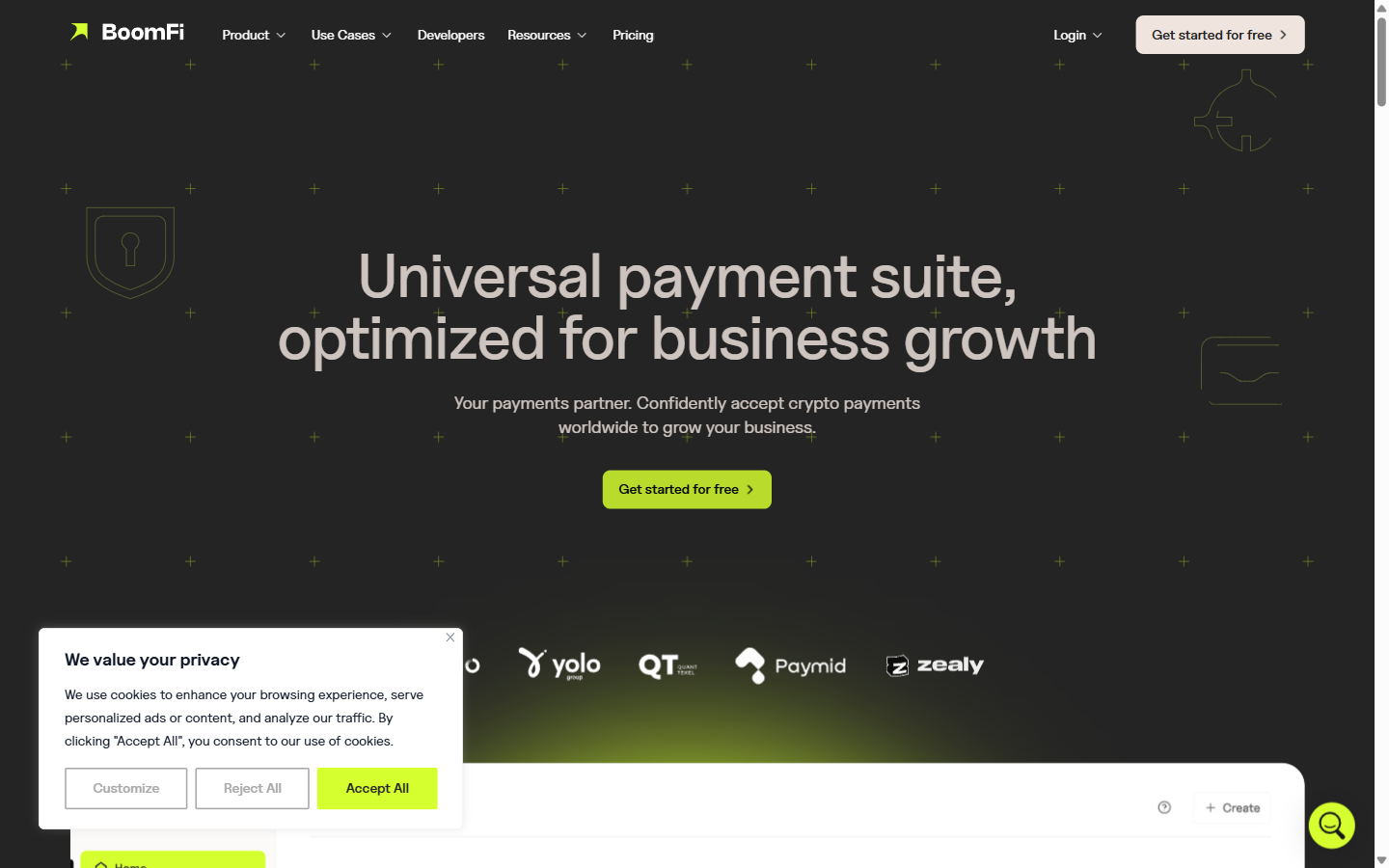
BoomFi and NOWPayments are the leaders here. BoomFi was literally built for crypto subscription billing, while NOWPayments bolted it on — but bolted it on well.
Payment Links
Best for: social media sellers, freelancers without websites, quick one-off payments.
You generate a link, send it via email, chat, or social media, and anyone can pay. No website, no integration, no code. This is the fastest path from "I want to accept crypto" to actually getting paid.
Nearly every gateway supports payment links now, but NOWPayments and BTCPay Server offer the best implementations.
Gateway Billing Feature Comparison
Here is how the major gateways stack up on billing-specific features:
Best Gateways for Crypto Invoicing
If you bill clients manually — you send an invoice, they pay, you deliver — here are your best options.
1. BitPay — Most Professional Invoices
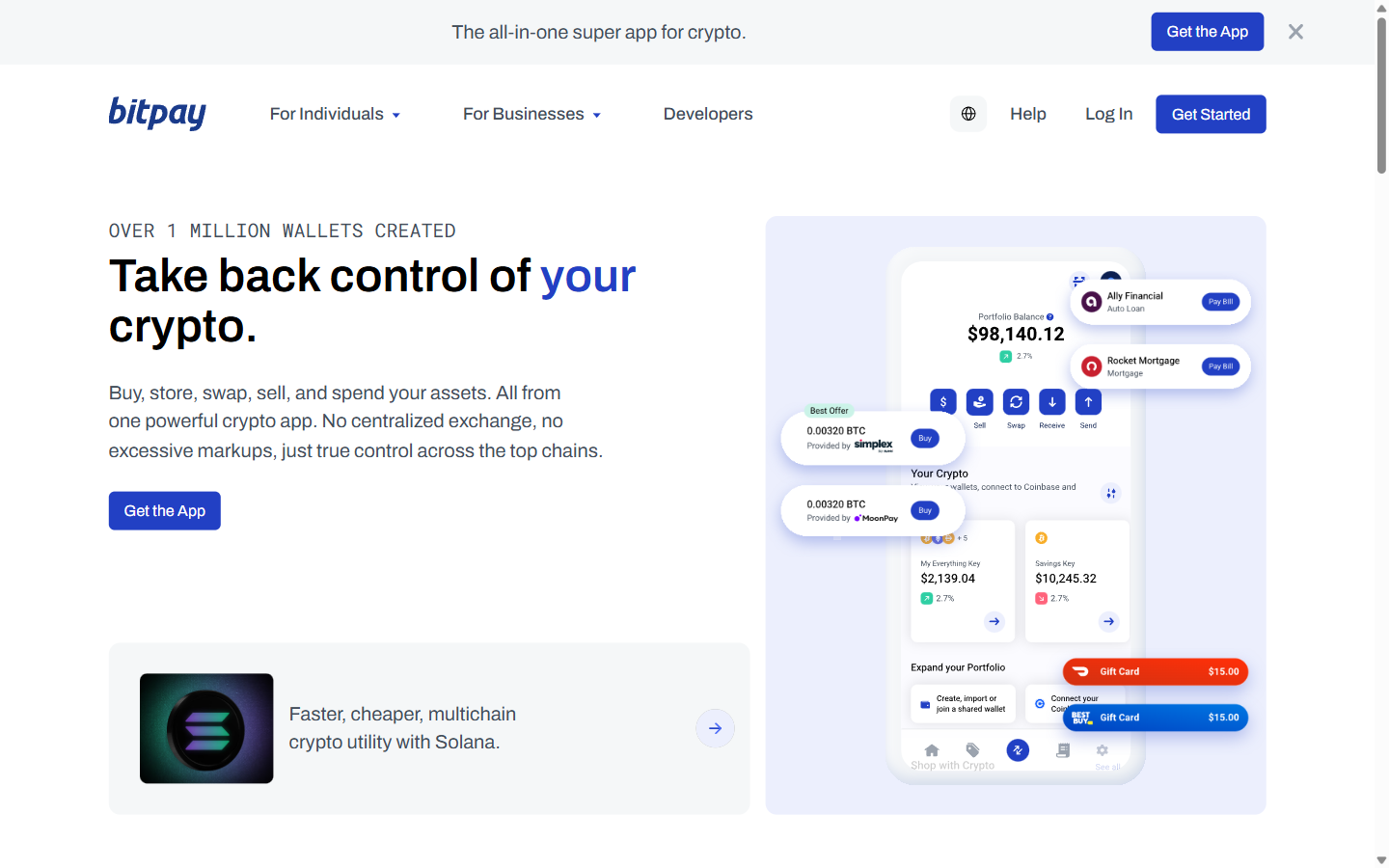
BitPay has been doing crypto invoicing longer than anyone else in the space, and it shows. Their invoices include line items, tax calculations, due dates, and branded formatting. The killer feature is fiat settlement: you invoice in USD, the client pays in BTC, and BitPay deposits dollars in your bank account the next business day.
The trade-off is KYC. BitPay requires full identity verification, which rules them out if privacy matters to your business. But for legitimate businesses that want professional billing with crypto as a payment option, BitPay is hard to beat.
Best for: Agencies, B2B services, businesses that want fiat settlement.
2. NOWPayments — Best Balance of Features and Flexibility
NOWPayments does invoicing, subscriptions, payment links, and mass payouts — all at 0.5% per transaction. Their invoices are not as polished as BitPay's, but they support 300+ cryptocurrencies and require only minimal KYC.
The invoicing API is clean: create an invoice via dashboard or API, get a payment page URL, send it to your client. They pay in any supported crypto, and you receive the coin you specified. The auto-conversion feature means you can receive USDT regardless of what the client pays with.
Best for: Businesses that want broad crypto support with reasonable fees.
3. BTCPay Server — Free and Self-Hosted
BTCPay Server includes a built-in invoicing system that costs exactly zero in processing fees. The invoices are functional rather than beautiful, but they work. You get payment tracking, email notifications, and webhook integration. The trade-off is you need to host your own server and manage your own wallet.
Best for: Technically capable businesses that want zero fees and full control.
Best Gateways for Subscription Billing
Recurring billing in crypto is fundamentally different from credit card subscriptions. There is no "pull" mechanism — you cannot automatically charge a crypto wallet. Instead, the gateway sends a payment request each billing cycle and the customer must approve it.
1. BoomFi — Purpose-Built for Crypto Subscriptions
BoomFi was designed from day one for recurring crypto payments. Their subscription engine handles plan creation, trial periods, upgrades, downgrades, and failed payment retries. The checkout experience is clean and they support stablecoins on multiple chains.
At 1% per transaction, BoomFi is more expensive than NOWPayments, but the subscription management features justify the premium if recurring revenue is your business model. They support both crypto-native payments and fiat on-ramps, so your customers can pay with a credit card and you still receive crypto.
2. NOWPayments — Subscription Billing with More Coin Options
NOWPayments added subscription billing as a feature rather than a core product, but the implementation is solid. You create a subscription plan in the dashboard, get a payment page URL, and customers subscribe by making their first payment. Each renewal sends an email with a payment link.
The advantage over BoomFi is coin support (300+ vs 6+) and lower fees (0.5% vs 1%). The disadvantage is less sophisticated subscription management — no trial periods, no proration on plan changes.
How to Set Up Crypto Billing
Here is a quick-start guide for the most common setup: invoice billing with NOWPayments.
Step 1: Create Your Account
Sign up at NOWPayments. You will need an email and basic business information. KYC is minimal — name and country are usually enough to get started.
Step 2: Set Your Payout Wallet
Add the wallet address where you want to receive payments. If you want to receive USDT regardless of what customers pay with, enable auto-conversion and set USDT as your payout currency.
Step 3: Create an Invoice
Go to the Invoicing section in your dashboard. Enter the amount, add line items if needed, and set a due date. NOWPayments generates a unique payment page URL.
Step 4: Send to Your Client
Share the payment page URL via email, Slack, or however you communicate with clients. The client opens the link, chooses their preferred cryptocurrency, and pays. You get a notification when the payment confirms.
Step 5: Track and Reconcile
All invoices appear in your dashboard with status tracking: pending, partially paid, paid, expired. Export to CSV for your accounting software.
Accounting and Tax Considerations
This is where most businesses stumble with crypto billing. Every crypto payment creates a taxable event — both for you (income) and potentially for your customer (capital gains or losses on the crypto they spent).
What You Need to Track
- Invoice amount in fiat — The USD (or local currency) value at the time of payment. This is your taxable income regardless of whether you hold the crypto or convert to fiat
- Crypto received — The amount and type of cryptocurrency received. This becomes your cost basis if you hold the asset
- Conversion rate — The exchange rate at the exact time of payment. Most gateways log this automatically
- Subsequent conversions — If you later sell or convert the received crypto, that is a separate taxable event
Making It Easier
Use a gateway with fiat settlement (like BitPay) to simplify accounting. You receive USD, report it as income, done. If you hold crypto, use a portfolio tracker like CoinTracker or Koinly that integrates with your gateway's transaction export.
If you are doing serious volume, hire a crypto-savvy accountant. The rules vary wildly by jurisdiction, and getting it wrong is expensive.
Find the Right Billing Gateway
Compare invoicing, subscription, and payment link features across every major crypto gateway on Payyd.
Compare Billing SolutionsFrequently Asked Questions
What is the best crypto billing solution for small businesses?
NOWPayments is the best all-round option for small businesses. It costs 0.5% per transaction, supports 300+ cryptocurrencies, and handles invoicing, payment links, and basic subscription billing. The dashboard is straightforward and you can create your first invoice in under 5 minutes.
Can I send professional invoices with crypto payment options?
Yes. BitPay offers the most professional invoicing experience with branded invoices, line items, tax fields, and due dates. NOWPayments and CoinGate also offer invoicing features, though they are less polished than BitPay's implementation.
How does crypto subscription billing work without pull payments?
Unlike credit cards where the merchant "pulls" the payment, crypto subscriptions use a notification model. The gateway sends the customer a payment request (via email or in-app notification) each billing cycle. The customer must actively approve each payment. BoomFi and NOWPayments are the best platforms for this.
Do I need KYC to use crypto billing services?
It depends on the gateway. BTCPay Server requires zero KYC (it is self-hosted). NOWPayments requires minimal KYC. BitPay requires full identity verification. If privacy is a priority, check our no-KYC gateway comparison.
How do I handle refunds on crypto invoices?
Most gateways support manual refunds through the dashboard. BitPay automates refund processing. For BTCPay Server, you send the refund directly from your wallet. The complexity is that crypto prices fluctuate — you need a refund policy that specifies whether you refund the original fiat amount or the original crypto amount.
Can I bill in USD but receive crypto?
Yes. Most gateways let you denominate invoices in fiat while accepting crypto payments. The gateway calculates the crypto amount at the current exchange rate. NOWPayments, BoomFi, and BitPay all support this. It protects you from volatility because the invoice amount is fixed in fiat.
What accounting software works with crypto billing?
Most gateways export to CSV, which works with any accounting software. BitPay integrates directly with QuickBooks and Xero. For crypto-specific accounting, use CoinTracker, Koinly, or CryptoTaxCalculator — they can import transactions from major gateways.
Is crypto billing legal?
In most countries, yes. Accepting cryptocurrency as payment is legal in the US, EU, UK, Canada, Australia, and most of Asia. The legal requirement is to report the income in your local fiat currency at the time of receipt. Some countries (like India) have specific regulations around crypto — check your jurisdiction before starting.